SUSTAINABILITY
At the core of our practice is the pursuit of systemic well-being, a condition more at risk than ever.
The built environment is one of the greatest contributors to the world’s climate crisis. As its designers, we acknowledge our responsibility and power to change its course completely.
MHM acknowledges these vulnerabilities and is open to uncertainty as our understanding of the implications of design on climate unfolds. This is an ever-evolving process in which we will continue the pursuit of greater knowledge and actively exchange our intellectual resources so that we, as a community, can design for a better future.
2030 COMMITMENT
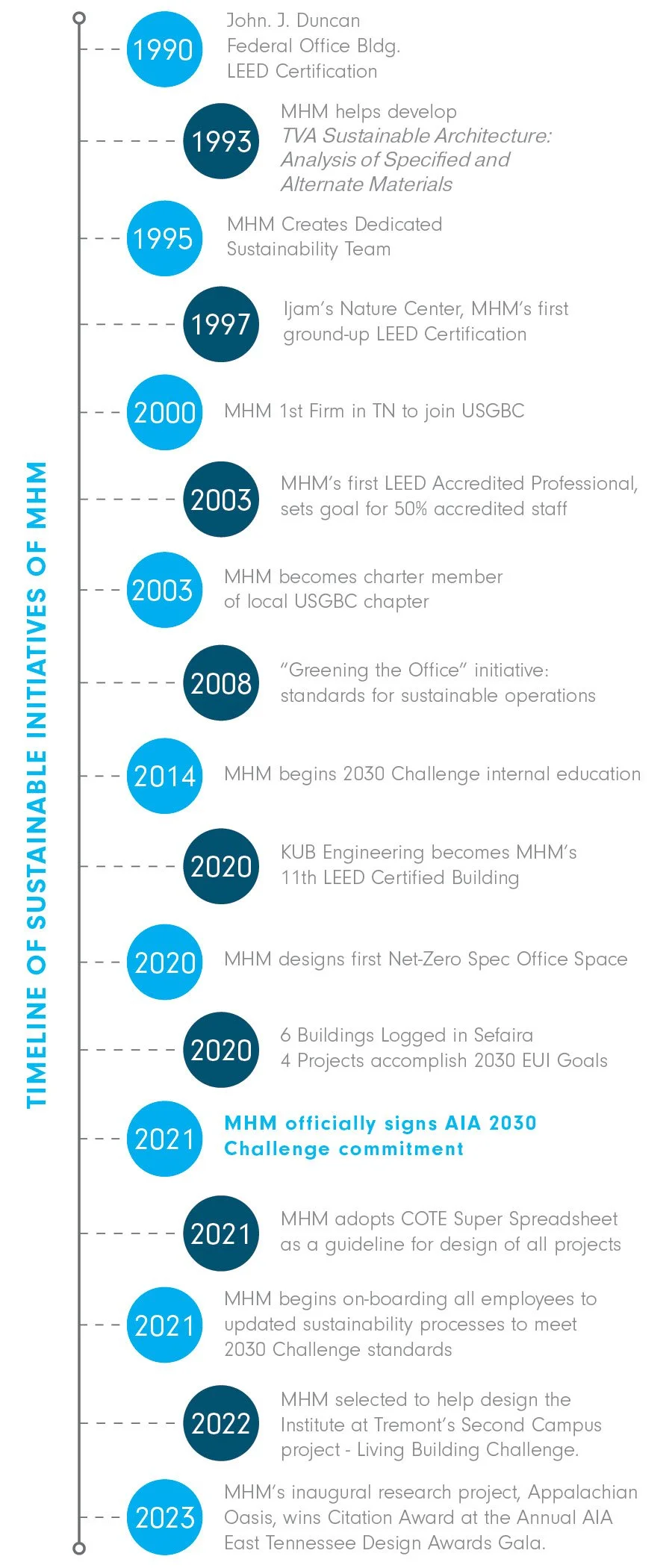
Along with guidance from the office Sustainability Committee, MHM has worked diligently since committing to focus its efforts towards meeting the spirit and goals of the AIA 2030 Commitment.
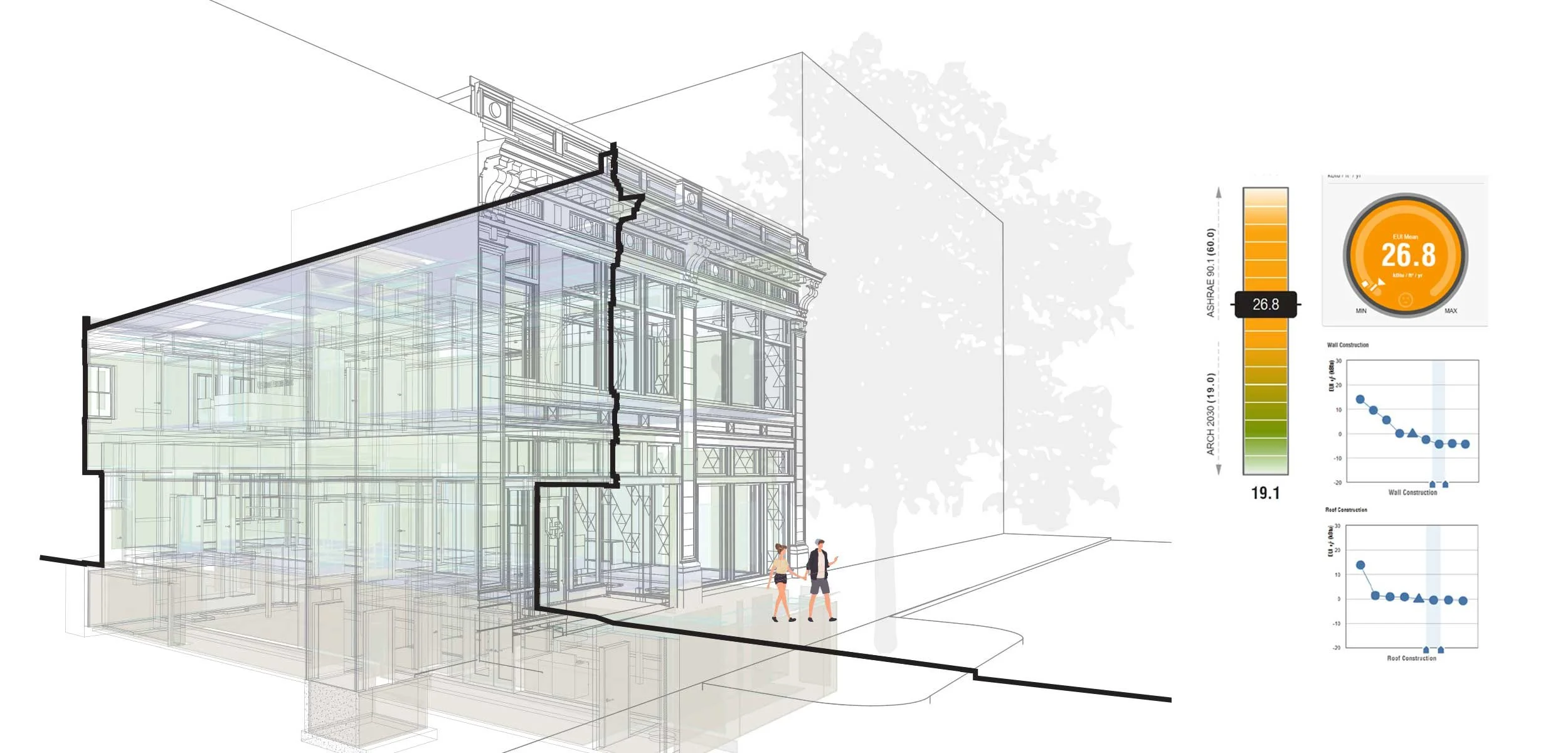
Our first year of documented projects (offices, school, facilities operations, retail) was reported to the Data Exchange and performed at a predicted EUI of 56% below the national energy baseline. Along with this continued design research and energy reduction implementation, MHM has adopted the AIA COTE Super-spreadsheet and Framework for Design Excellence as a design/documentation process tool required for all projects within the office.
This self-elected design requirement will bring the same level of care and sustainable consciousness to each project throughout the office in an effort to continue progress toward our sustainability goals. There is still much work to do in bettering the built environment’s efforts towards climate action and MHM will continue to align themselves with these local and global efforts at large.

KUB ENGINEERING BUILDING
Certified LEED
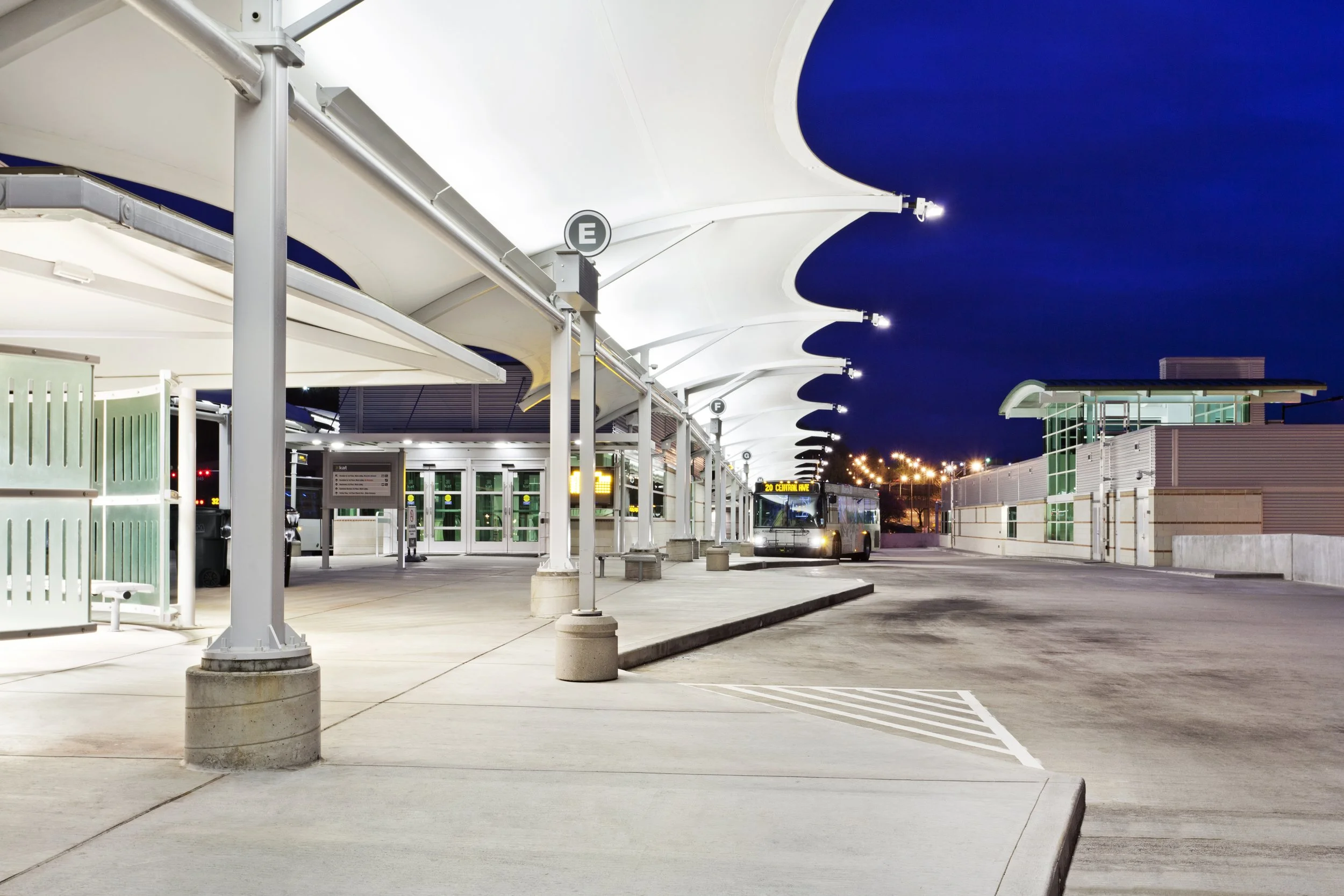
KNOXVILLE CENTRAL STATION TRANSIT FACILITY
Certified Silver LEED-NC
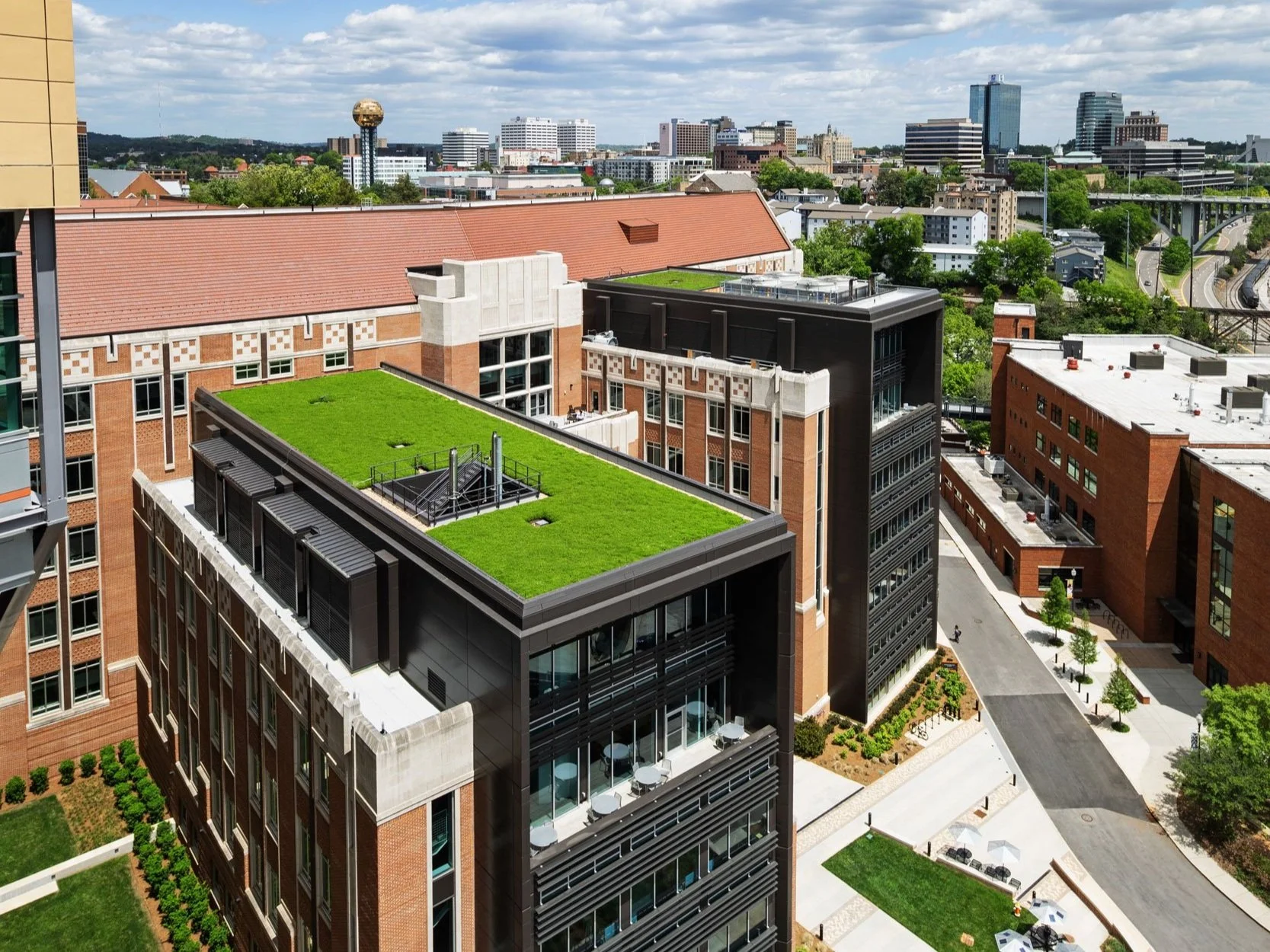
UNIVERSITY OF TENNESSE ZEANAH ENGINEERING COMPLEX
State Higher Performance Building Requirements (HPBr)