MODEL HOME: MISSING MIDDLE
RESEARCH PROJECT
MODEL HOME: MISSING MIDDLE
LOCATION:
Knoxville, TN
PROJECT NARRATIVE:
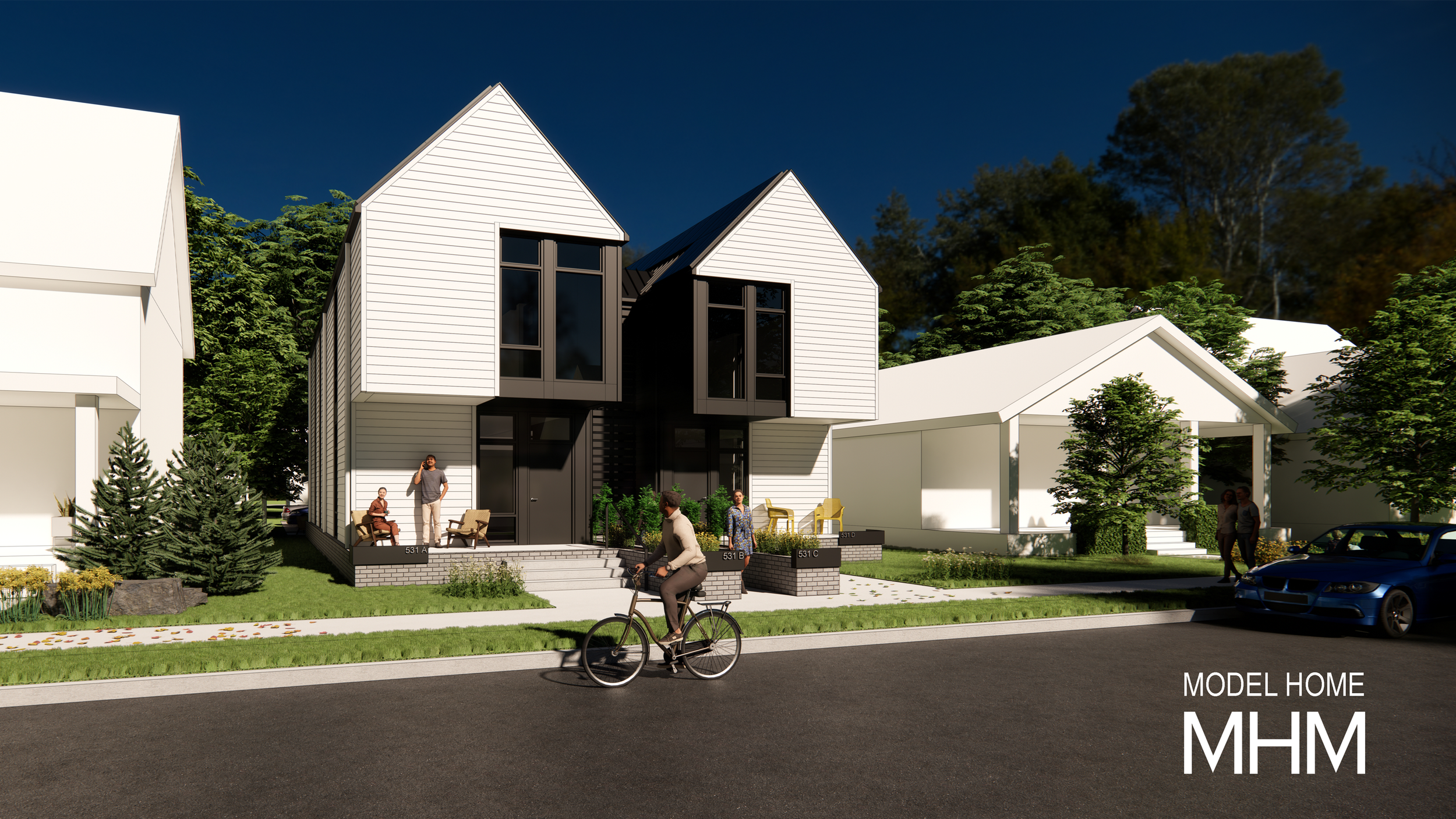
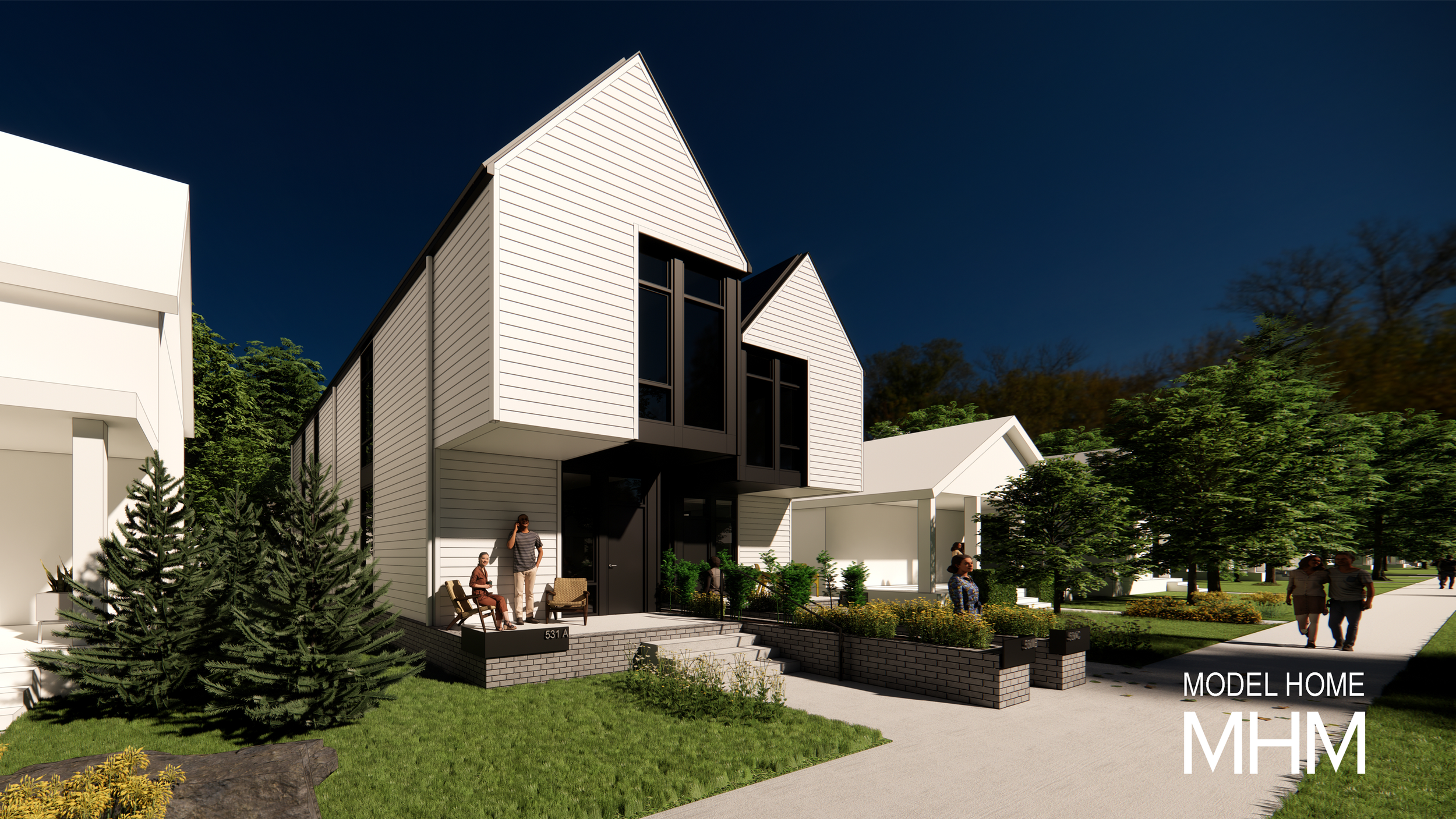
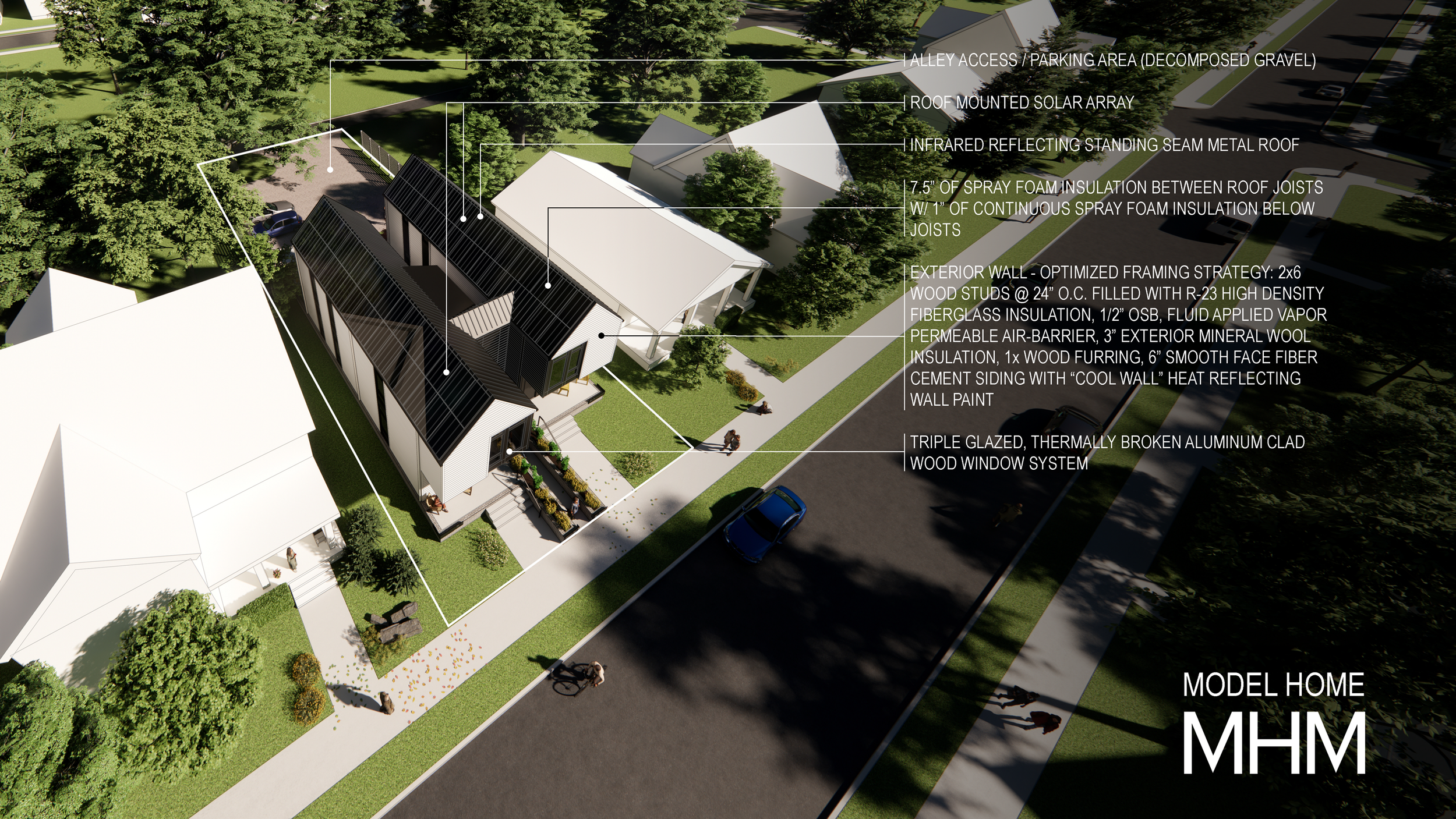
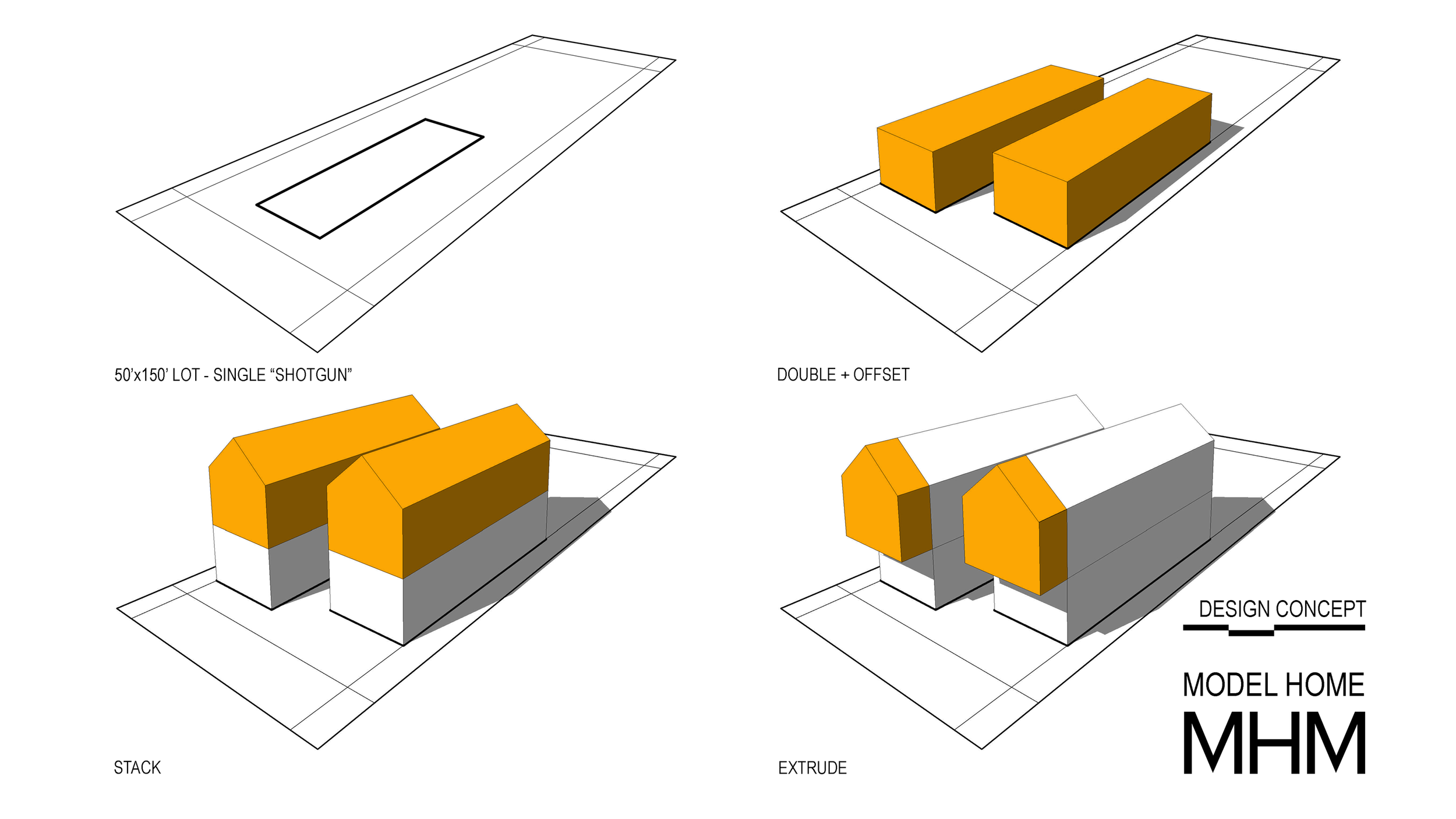
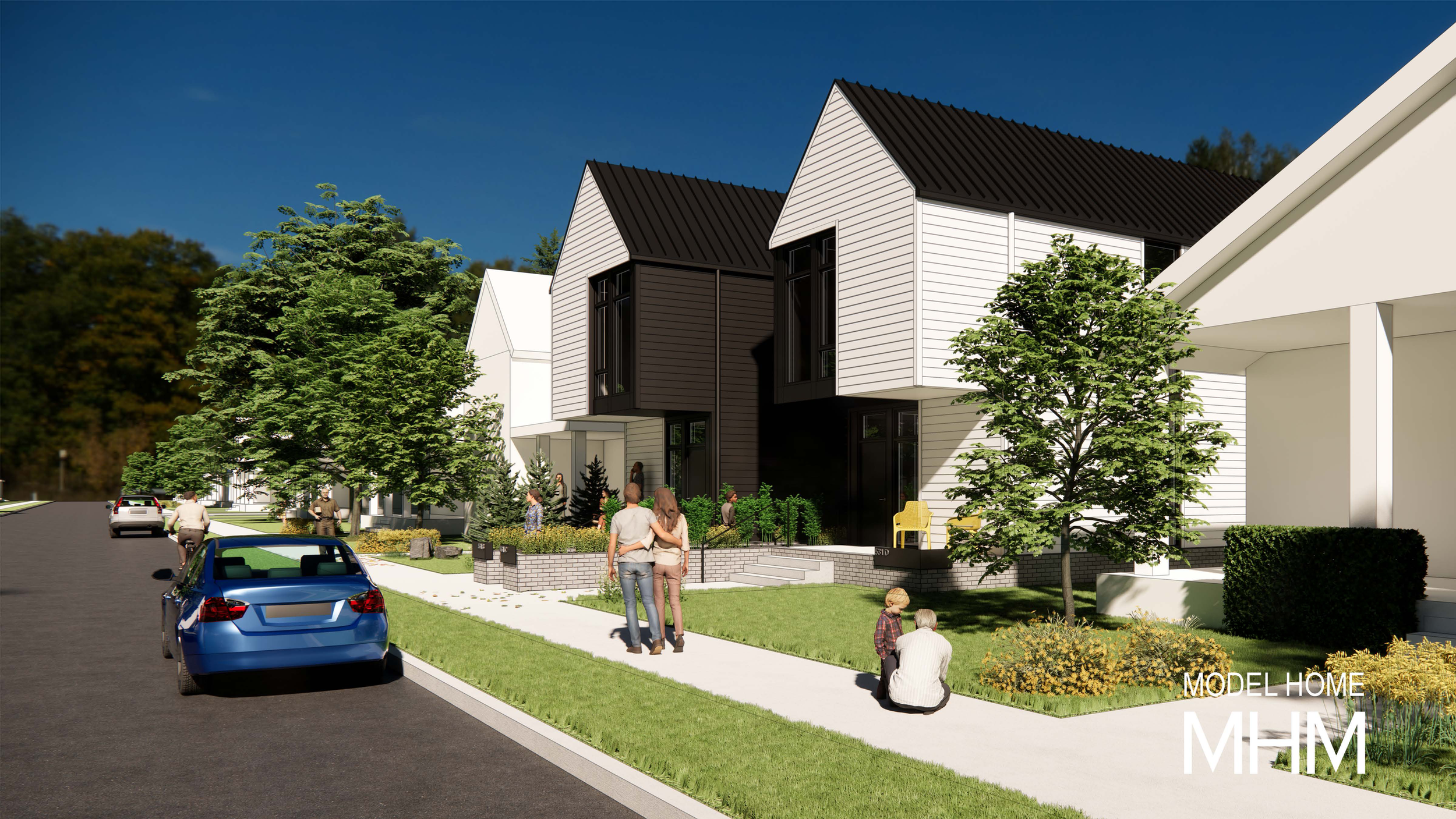
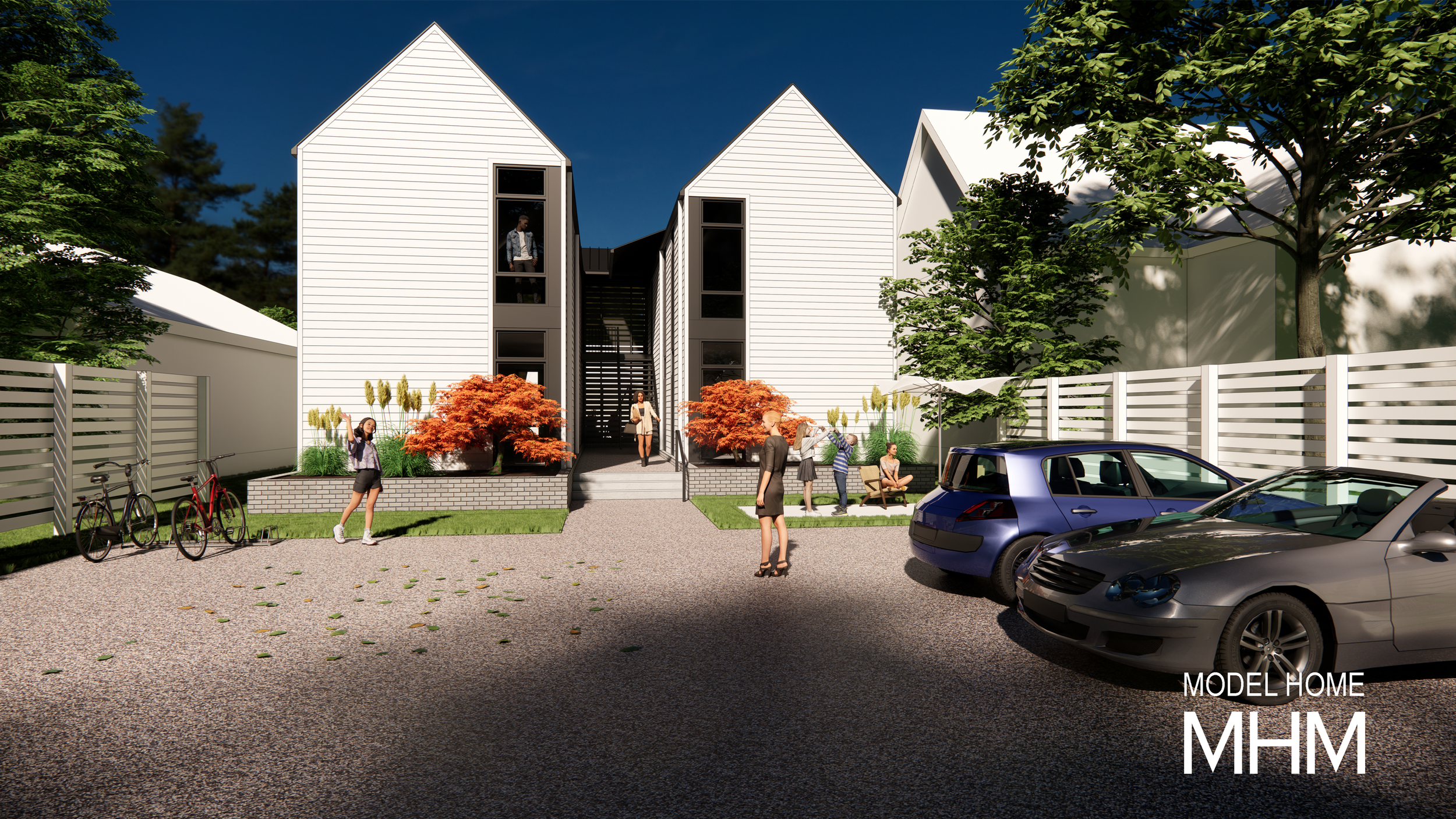
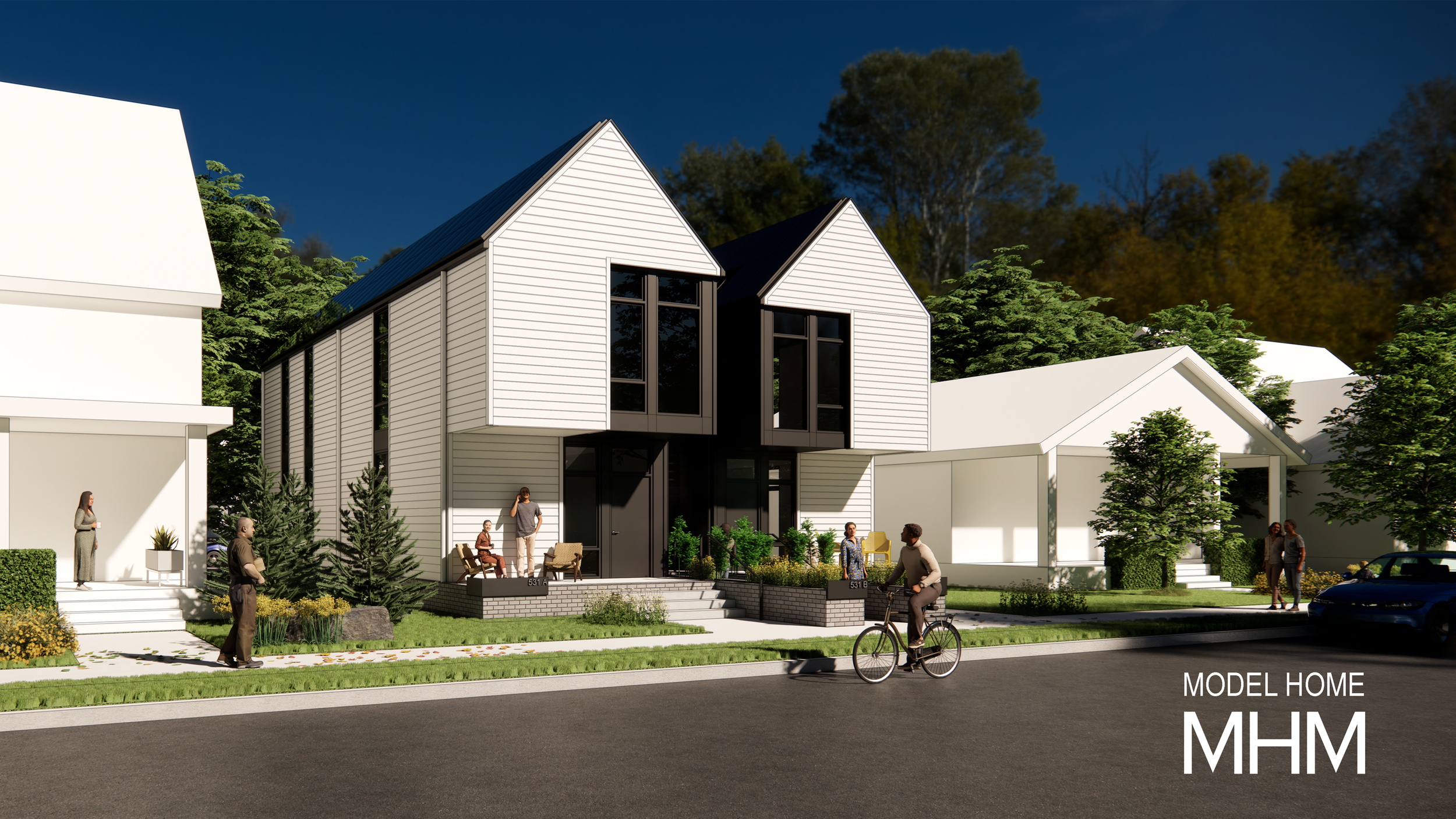
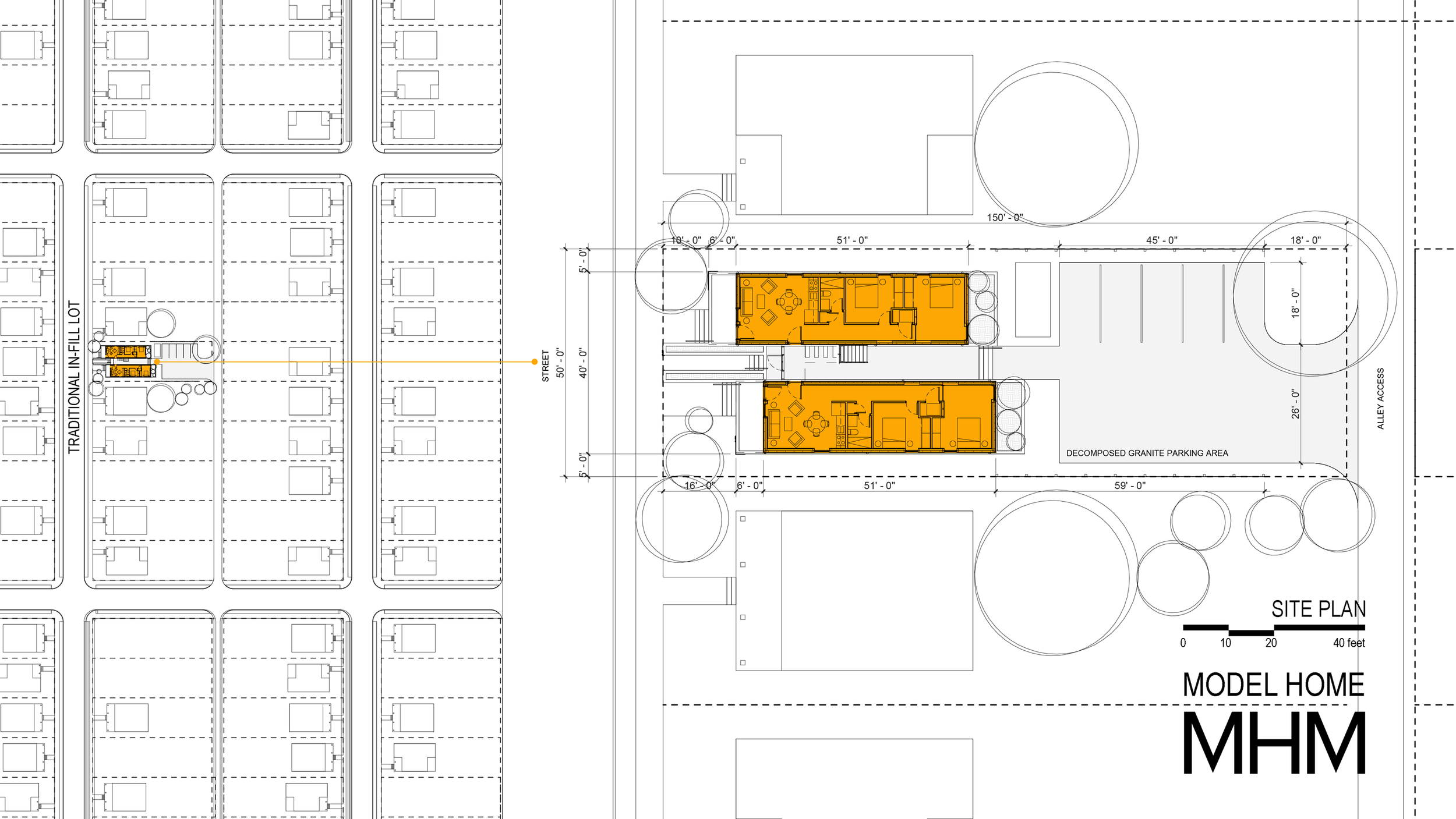
Model Home is an architectural research project that tests a replicable “missing middle” infill prototype for Knoxville’s historic urban neighborhoods. Working within a standard 50’ x 150’ lot, the project reframes the traditional Southern “shotgun” house as a compact, contemporary, multi-unit model that is both contextually sensitive and climate responsive.
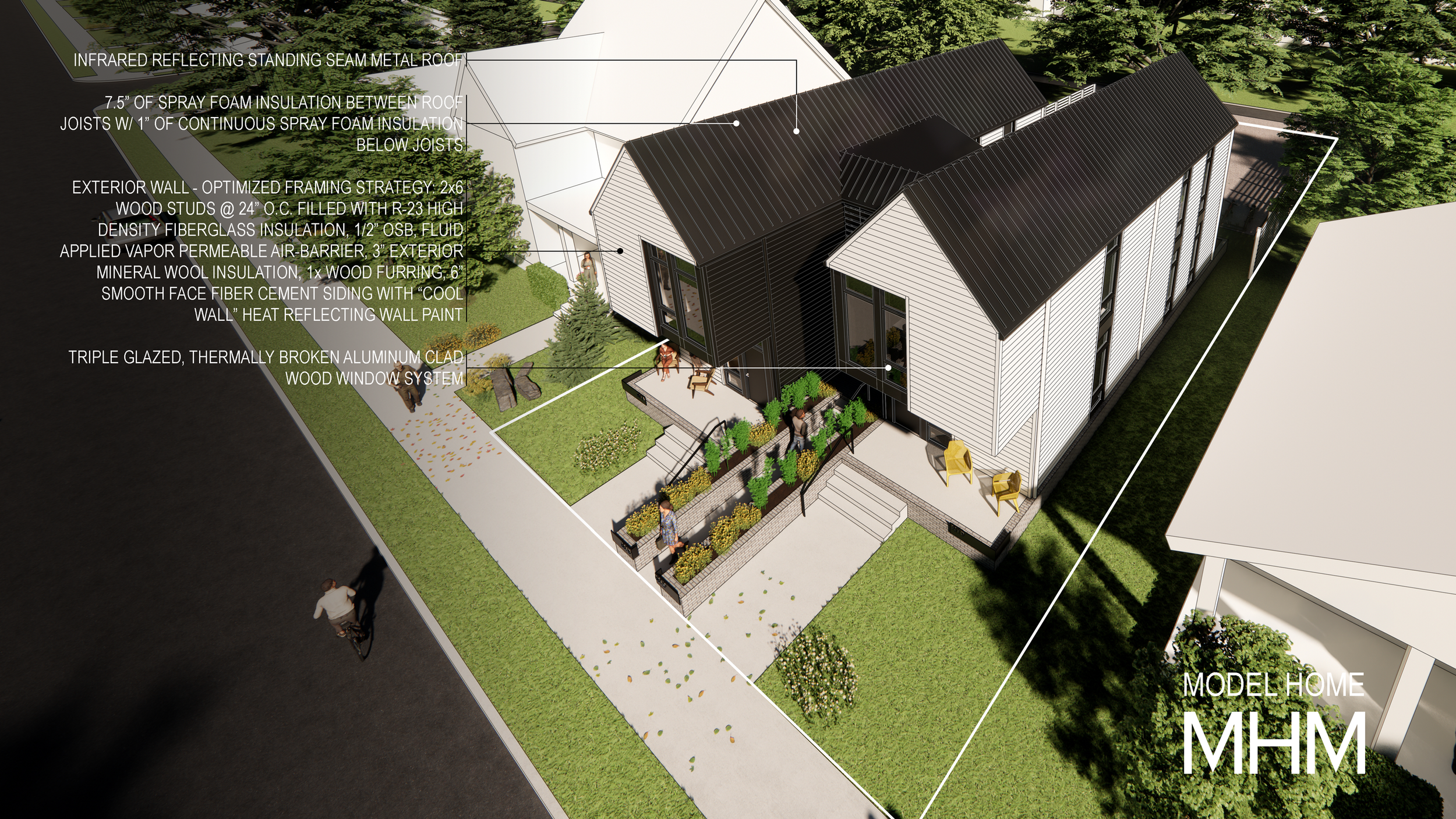
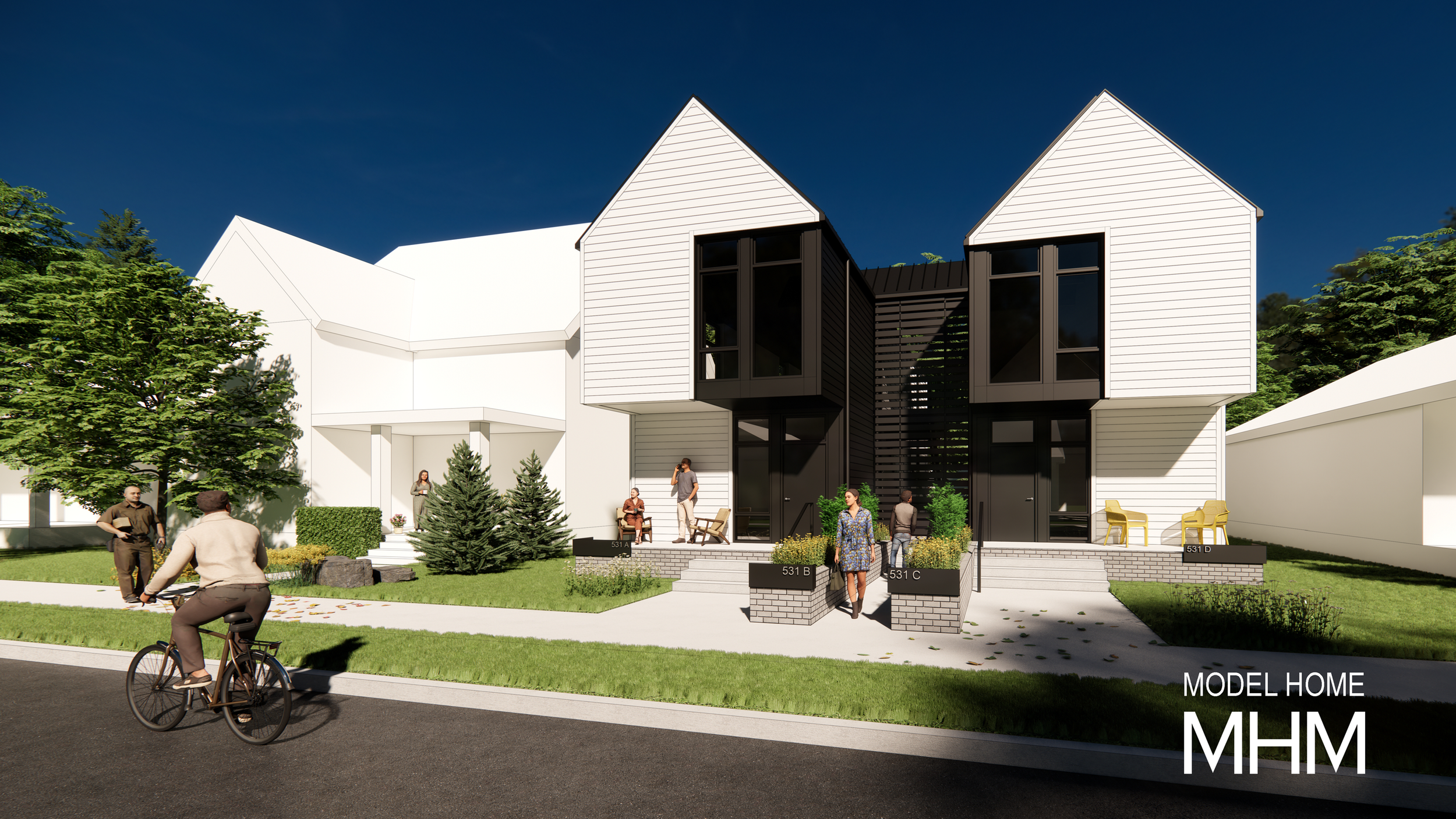
The design studies how four two-bedroom units — two at grade and two stacked above — can be organized into a slender, house-scaled volume that maintains the familiar rhythm, massing, and porch culture of adjacent single-family homes. By right-sizing floor plates and consolidating circulation, Model Home maximizes usable area and constructability while preserving meaningful outdoor space for shared yards, stoops, and garden areas. The intent is to deliver attainably priced units at a walkable, transit-supportive density without defaulting to mid-rise forms that can feel out of scale with Knoxville’s historic fabric.
Model Home operates at the intersection of housing policy, shifting demographics, and environmental urgency. It aligns with Knoxville’s emerging zoning reforms and Missing Middle Housing efforts, responding to rising costs, low inventory, and the needs of millennials, baby boomers, and single-person households who seek smaller, well-located homes near the urban core. Through collaboration with City of Knoxville Planning, local agencies, and academic partners, the project tests how this prototype can navigate existing and proposed codes, neighborhood context, and site conditions to move from concept to buildable standard.
Affordability and sustainability are treated as inseparable aims. The project targets Passive House Institute US (PHIUS) design certification, employing operational and embodied carbon modeling to reduce energy demand, improve comfort and durability, and stabilize long-term costs for residents. By deploying standardized assemblies and common building techniques, the design supports both feasibility and scalability across multiple infill parcels.
Ultimately, Model Home asks what a contemporary “American Dream” looks like in the margins between renting and owning, single- and multi-family, private and shared. It proposes a modest, beautiful, and repeatable house-scale building that advances equitable, resilient, and climate-conscious urban housing—rooted in Knoxville, yet exportable to cities facing parallel housing and environmental pressures.